Shadowspace
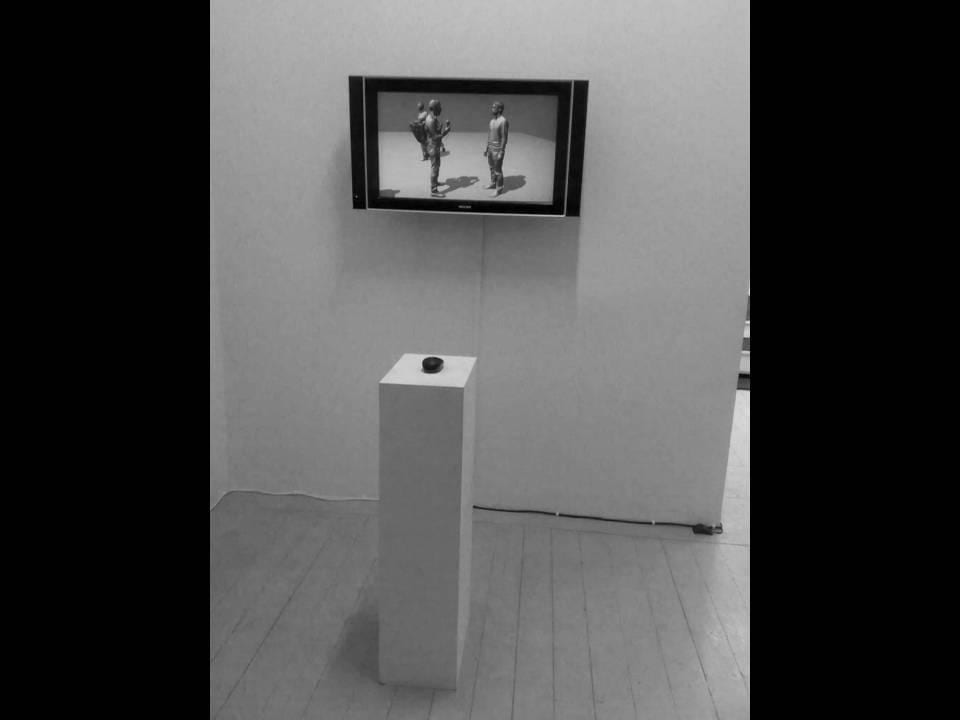
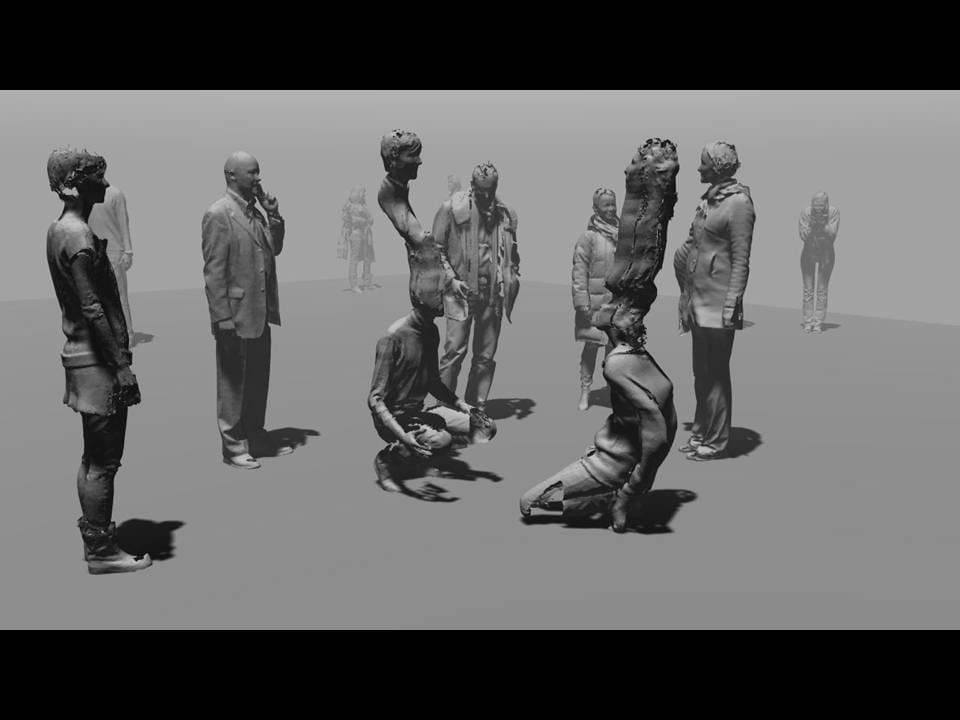
Experiments with digital techniques, 3D scanning, projections, 3D cameras and audience interactions around concepts such as: idea, time, fiction, mathematics, reality, virtuality. In an installation at Mejanlabs the audience could 3D scan themselves and place themselves on a plane in a computer game. Visitors could "play" by moving around a virtual sculpture park, looking at the other visitors and at themselves.
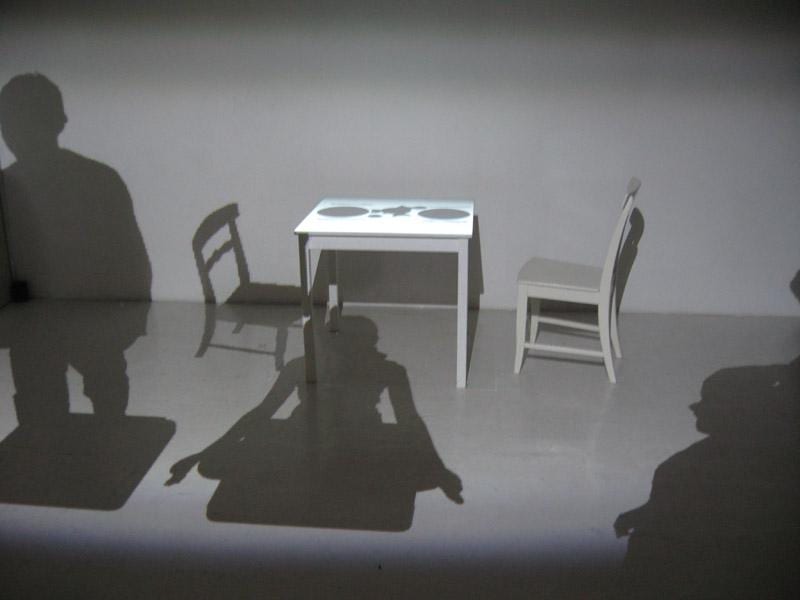
At Ada Street Gallery in London, ghostly gliding shadows of the 3D-scanned Swedish audience were projected onto the gallery walls and onto other artworks. When the English audience stepped into the projector's beam they also cast a shadow on the wall the same size as the virtual one — a kind of mix of two audiences and two worlds, separated by the infinitely thin shadow.
At T-Tasu Gallery in Japan, experiments were made with invisible sculptures visible only through their shadows. In collaboration with researchers and students at the AIST industrial research institute, advanced 3D cameras were installed so the audience could interact with the objects in the room. They could move them, knock them over and rearrange them.
"Is there anything timeless? That stands outside time? Time can be seen as many rooms laid out in a row. If you stack all the rooms on top of one another, everything happens at once, and then we are truly limited, able to see only the now of all nows — much as we can see only a single perspective view of the room out of the billions of images the room consists of. If it were possible to see more of reality, we might see other events as ghostly images on top of the image of the now. Images like shadows of worlds we will never reach. Considering these things, it is likely that we live in a shadow world where we see a small part of something far greater."